
Hey there! So you asked, “How can AI help me revise for board exams?” — great question. Let’s take a walk together through the world of AI (Artificial Intelligence), and see how it can be your study buddy (not your substitute) during board exam preparation. I promise to keep it casual, friendly, and (mostly) jargon‑free.
What’s AI, Anyway? (In Simple, Non-Scary Words)
Before we dive into revision hacks, let me explain what AI really is — and why it’s no wizard from fantasy (though sometimes it feels like magic).
-
AI (Artificial Intelligence) is basically software or systems built to perform tasks that typically need human “intelligence.” These tasks could be: understanding language, solving problems, recognizing patterns, or making decisions.
-
Think of AI like a clever assistant. It’s not perfect. It learns from data (lots of examples), and then uses what it learned to help with new tasks.
-
Some AI is “narrow” (good at one thing) — like a calculator is terrific at numbers but horrible at writing poetry. Other AI (more advanced) can juggle multiple tasks, but still has limitations.
So when we say “How can AI help me revise for board exams,” what we really mean is: what tools and tricks powered by AI can make my revision smarter, faster, and more effective?
Why Even Consider AI for Exam Revision?
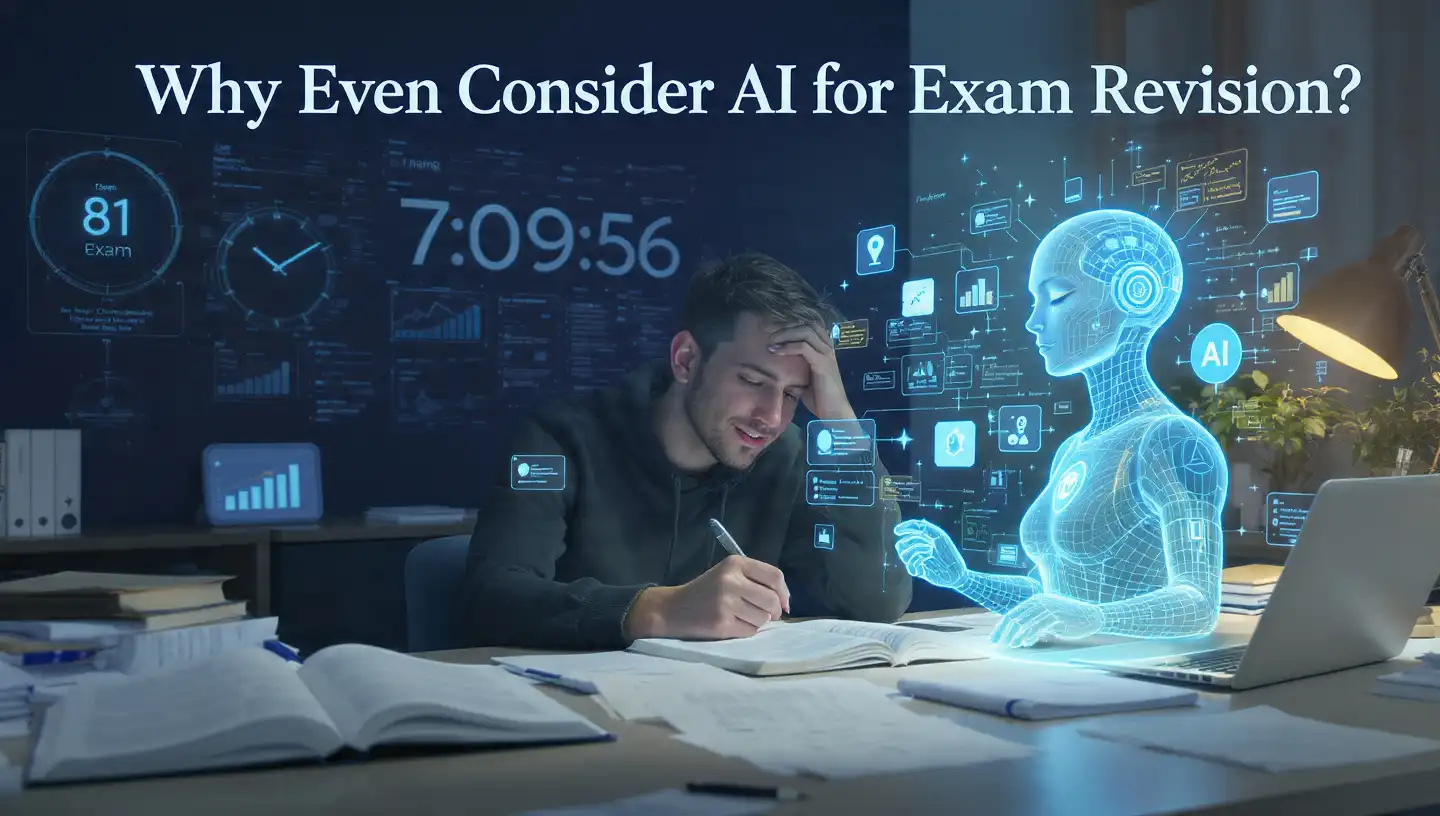
“Why not just stick with textbooks and class notes?” you might ask. Fair. But here’s why AI can add serious value — especially during those stressful months before boards.
-
Personalization at Scale
AI can tailor study plans, quizzes, and explanations based on you — your strengths, weaknesses, and pace. -
Instant Feedback & Correction
You don’t have to wait for a teacher to mark your work. AI can point out mistakes, suggest improvements, or offer alternate methods. -
Time Saver
Instead of manually creating flashcards, summarizing chapters, or drafting revision schedules, AI tools can help you with these in a fraction of the time. -
Engagement & Variety
It’s easy to zone out doing the same routine. AI can vary formats (flashcards, quizzes, explanations, dialogues) and keep things fresh. -
Data-Driven Insights
You get metrics: how many topics you’ve covered, which ones you struggle with, and how your accuracy is improving. That feedback helps you prioritize.
How AI Can Help Me Revise for Board Exams: Real Use Cases & Ideas
Let me walk you through several practical ways to use AI during your board exam prep. Think of these like tools in your study toolbox.
1. Smart Summaries & Condensed Notes
Walls of text in your textbooks? AI can help.
-
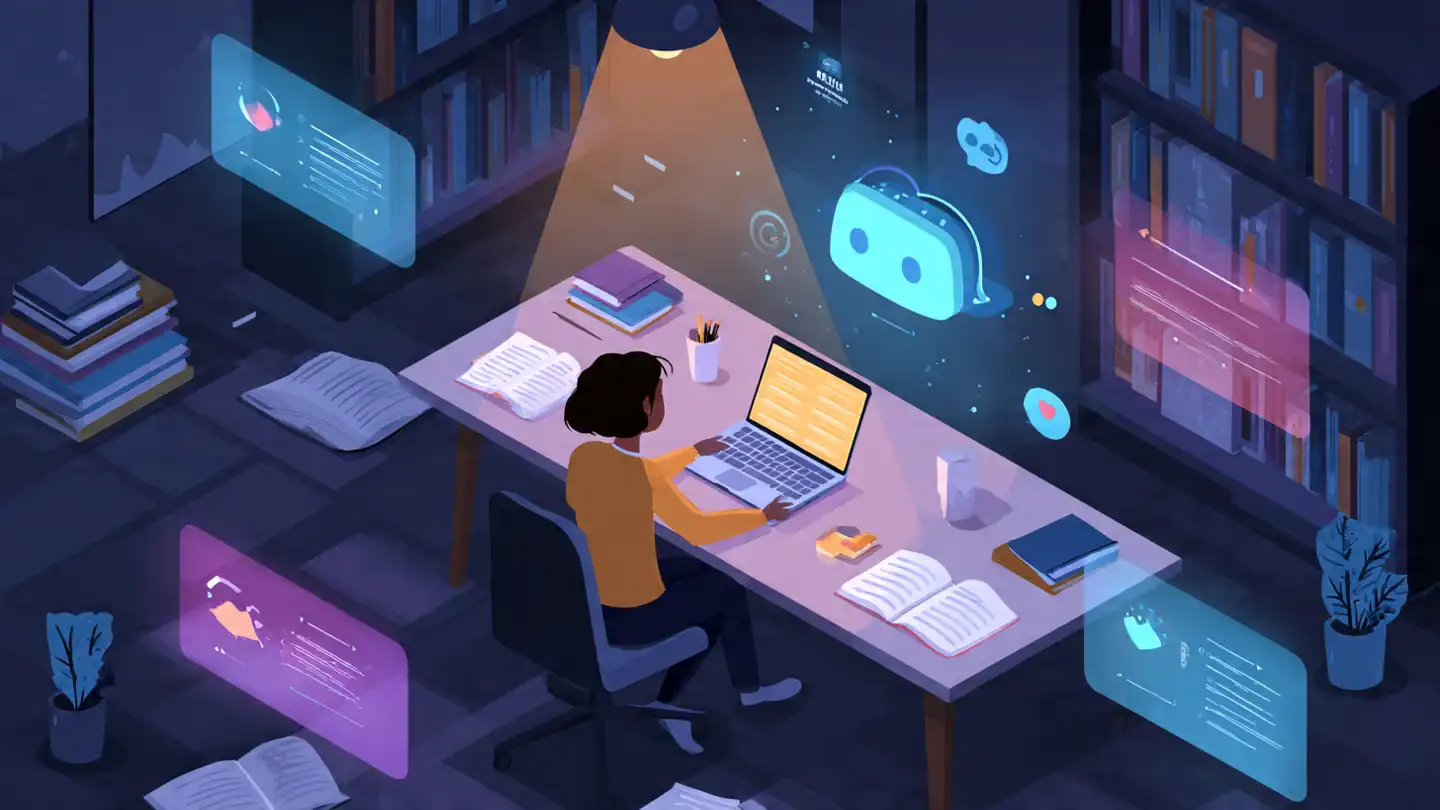
You paste or upload a chapter, and AI generates a concise summary or “cheat sheet” of the key ideas.
-
Some AI tools let you choose the length or style (bullet points, narrative).
-
This helps on days when you’re tired but still want to revise something.
Tip: Always glance through the original to verify nothing crucial got lost.
2. Flashcards & Spaced Repetition
One of my favorite tricks:
-
AI tools can auto-generate flashcards from your notes or textbook.
-
Then they schedule review sessions based on spaced repetition (you see hard cards more often).
-
This helps cement things in your long-term memory.
3. Practice Quizzes & Mock Tests
“Practice, practice, practice” — we’ve heard it a million times. AI can supercharge it.
-
You can ask AI to generate questions (MCQs, short answers, fill-in-the-blank) on a topic.
-
It can also grade your answers, highlight errors, and give hints.
-
Some platforms embed AI-generated feedback so you don’t just see “wrong,” but understand why.
4. Asking for Explanations & Clearing Doubts
Stuck on a concept? AI is there.
-
You can ask, “Explain the Doppler effect like I’m 12,” or “Give me 3 examples of oxidation in daily life.”
-
You can also follow up: “But why exactly does that happen?”
-
This back-and-forth can mimic a tutor session — without needing to schedule or pay.
5. Revision Scheduling & Planning
Often, the trickiest part is knowing what to study when.
-
Tell AI your exam dates, number of chapters, and hours per day you can devote.
-
Ask it to generate a customized revision plan — when to revise each topic, when to take mocks, buffer days, etc.
6. Voice / Audio Modes & Podcasts
If you’re commuting or want to revise while walking, AI can help convert content to audio.
-
Some tools let you convert summaries or notes into audio (text-to-speech).
-
You can “listen and learn” while doing chores or traveling.
7. Uploading Lecture Slides, PDFs & Notes
Some advanced AI tools allow you to upload your materials — slides, PDFs, notes. Then:
-
You can query them (“What did the teacher say about photosynthesis in slide 12?”).
-
The AI builds a searchable “memory” of your study content.
8. Weakness‑Spotting & Gap Analysis
-
As you practice, AI can identify topics you’re weak in (low accuracy, repeated mistakes).
-
It can suggest extra practice or automatically assign more quizzes on those topics.
-
That ensures you’re not blind to your own weak spots.
Sample Workflow: A Day of Revision with AI
To help you visualize, here’s a “day in the life” of a board exam student using AI wisely:
-
Morning
Use AI to make a quick summary of today’s chapter. Skim summary + original. -
Midday Practice
Ask AI to generate 10 MCQs on that chapter. Solve. Get feedback. -
Afternoon
Upload your class notes. Ask AI, “Which points in these notes are missing from my summary?” -
Evening
Use flashcards generated by AI. Review previous chapters too. -
Night Review
Tell AI your plan for tomorrow. It adjusts based on your progress today.
Benefits, Limitations & Things to Watch Out For
Benefits

-
Saves time
-
Customizes to you
-
Offers feedback & practice
-
Improves engagement
-
Helps expose weaknesses
-
Let’s you learn 24/7
Limitations
-
Inaccuracy
AI can sometimes give incorrect or incomplete answers. -
Over-reliance
Letting AI do all the work can lead to shallow learning. -
No Emotional Support
AI can’t understand how tired or stressed you are. -
Privacy Concerns
Be cautious when uploading personal or exam materials. -
Not Everyone Has Equal Access
Devices, the internet, and tools may not be available to all students.
Future Potential of AI in Education
AI in education is just getting started. Here’s what we might see more of:
-
Personal Tutor Bots
Always-on assistants that adapt to your learning style. -
Multimedia Explainers
Video + Text + Audio explainers, generated instantly. -
Smart Feedback Systems
Real-time feedback on essays, diagrams, code, and more. -
Motivational AI
Tools that track your mood and offer encouragement.
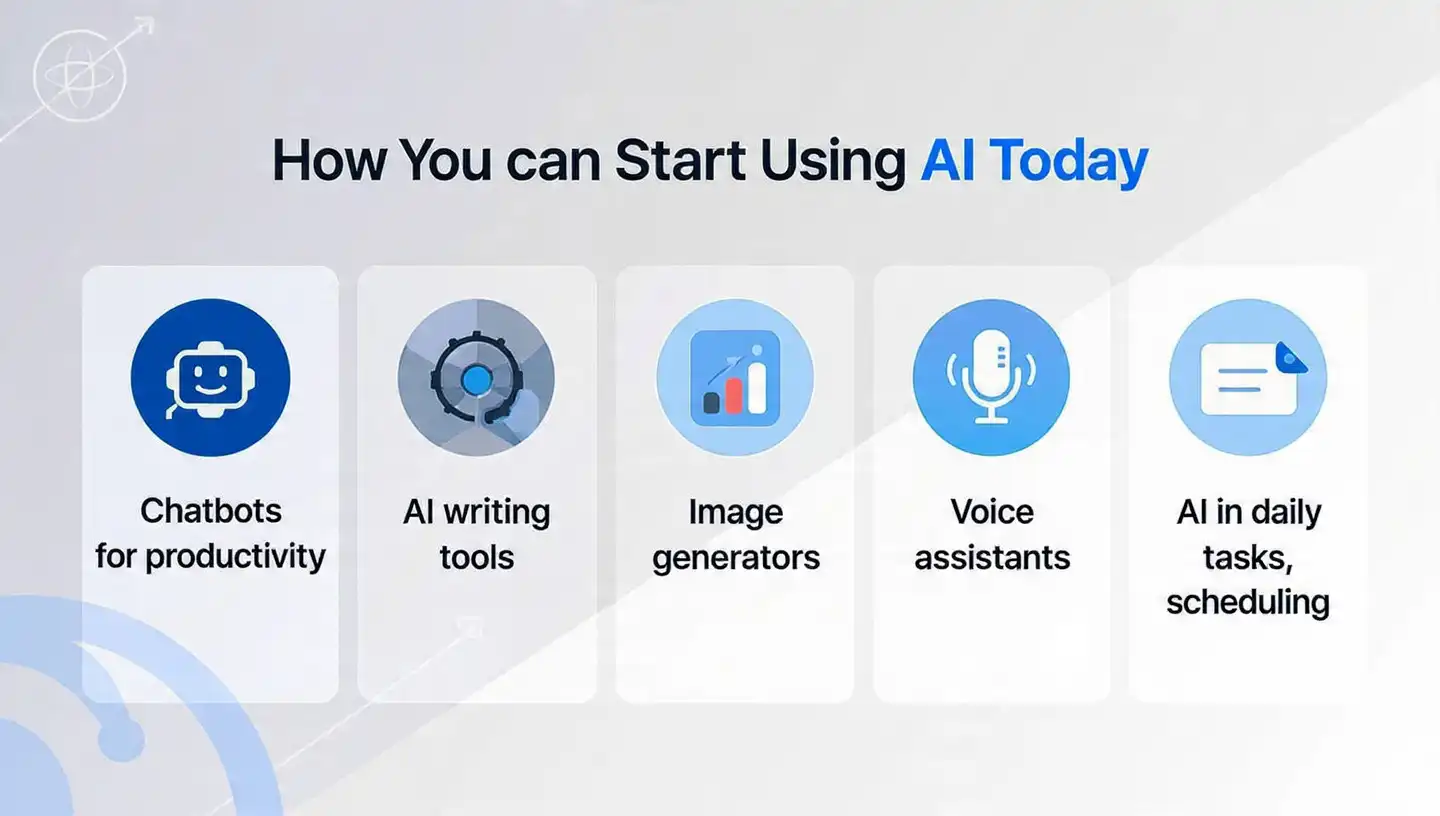
How You Can Start Using AI Today
Here’s a quick action plan:
-
Choose a free AI tool (like ChatGPT or an AI revision app).
-
Ask it to summarize your current chapter.
-
Practice with questions generated by the AI.
-
Review mistakes and clarify doubts by asking for simpler explanations.
-
Build a flashcard deck.
-
Let AI help plan your weekly revision routine.
-
Repeat this daily — just 1 or 2 topics per day is enough.
Traditional Methods Still Matter
Use AI to enhance, not replace, traditional techniques like:
-
Handwritten notes
-
Solving board papers
-
Group study
-
Explaining topics aloud to friends
-
Consulting teachers for complex topics
Conclusion:
So, if you’re still wondering “How can AI help me revise for board exams?”, the answer is: in many ways — but only if you stay in charge.
Use AI to boost your productivity, not replace your efforts. Blend it with traditional methods, stay curious, and most importantly — enjoy the process.
Board exams are just one phase. Learning how to learn smartly (with or without AI) will benefit you for life.
If you’d like a list of the best free AI tools for revision, just let me know. I can share a ready-to-use toolkit to get you started.
People Also Ask: FAQ
What is Artificial Intelligence?
Artificial Intelligence is the ability of machines or software to mimic human thinking and decision-making. It can analyze data, understand language, and solve problems.
How is AI used in daily life?
AI is used in voice assistants, Google Maps, YouTube recommendations, smart home devices, and even online shopping suggestions.
Is AI dangerous?
AI itself isn’t dangerous, but it can cause harm if used irresponsibly. The key is ethical development and proper use.
Can AI replace humans?
AI can assist humans, not fully replace them — especially in creative, emotional, or critical thinking tasks.
How can students learn AI?
Students can learn AI through online platforms, coding bootcamps, and free tutorials. Start with basic Python and explore AI modules.
Is AI cheating?
Using AI for learning or summarizing is okay. But copying AI answers without understanding or during exams is unethical and can be considered cheating.
Will AI replace textbooks and teachers?
No. AI is a support tool. Textbooks and teachers provide structure, motivation, and personalized guidance that AI cannot fully replace.